Due-Back Dates and Overdue Tracking
When you check something out, you can set an optional due back date. This is what powers overdue tracking — Archivers.ai compares today's date to that field and flags anything still out past it.
Setting a due-back date
In the Check out dialog, the Due back field is a plain date picker. It's optional — leave it blank for movements with no expected return date (a long-term exhibition loan, for instance).
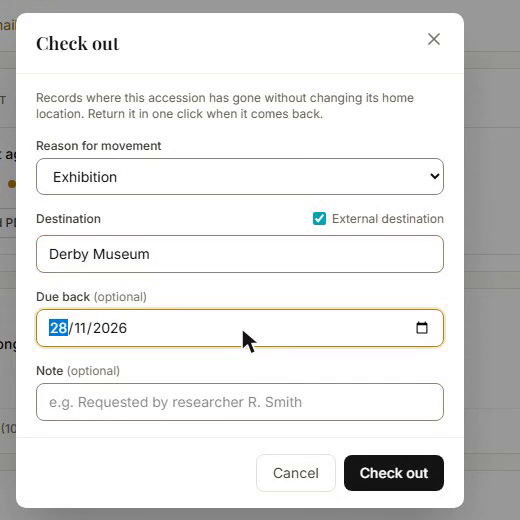
Where overdue items show up
- On the item's own Storage location panel — an overdue check-out shows in red with "Overdue — was due back [date]" instead of the amber "Due back" styling used for items still within their window.
- On the Out now list (Locations page) — overdue rows are highlighted, and the Overdue only filter isolates them.
- On a location's own detail page, under Out from here, if the overdue item's home is that location.
Returning an overdue item
Exactly the same as any other return — click Return, add an optional note, confirm. There's no separate "overdue return" flow or penalty; the due-back date is informational, not enforced.
Honest limits
Movement tracking is a log, not a full loans or production management module. Specifically, it does not have:
- Borrower or reader records — there's no separate entity for "who has this" beyond the free-text destination and note you type at check-out. If you need to track researcher identity formally, record it in the note field.
- Loan agreements — no paperwork generation, signing, or terms tracking for external loans.
- Automated chasing of overdue items — no reminder emails, no escalation. Overdue tracking is pull (you check the list), not push (nothing chases you or the borrower automatically).
- Condition reporting — "Conservation" is a movement type you can select, but there's no condition report, treatment record, or conservation priority module behind it.
- Stocktake / location audit mode — periodically verifying that everything believed to be on a shelf is actually there is not built.
If your workflow depends on any of the above, treat movement tracking as a lightweight "where is it and when should it come back" log that sits alongside whatever paper or external process you already use for borrower management and conservation records.